
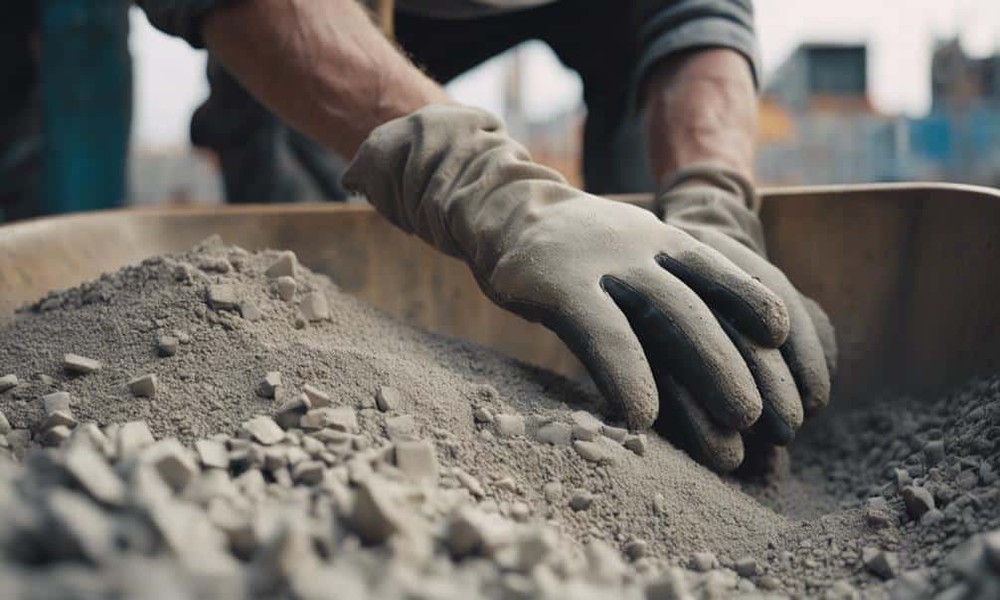

Concrete is the backbone of modern construction. From homes and roads to bridges and skyscrapers, it is one of the most widely used building materials in the world. Yet, the strength and durability of concrete do not come from cement alone-it is the precise combination of sand, cement, water, and aggregates that determines its performance.
Understanding the science behind sand to mix with cement is essential for creating high-quality, long-lasting concrete structures.
What is Concrete Made Of?
Concrete is a composite material made up of:
- Cement – The binding material that holds everything together
- Sand (Fine Aggregate) – Fills voids and provides smoothness
- Coarse Aggregate – Adds strength and bulk
- Water – Activates the chemical reaction (hydration)
The interaction between these components determines the final strength and durability of the concrete.
The Role of Cement
Cement acts as the glue in concrete. When mixed with water, it undergoes a chemical reaction called hydration, forming a hard, stone-like material that binds aggregates together.
Key functions of cement:
- Provides strength and rigidity
- Binds sand and aggregates
- Determines setting time and durability
The Importance of Sand
Sand plays a crucial role in improving the workability and strength of concrete.
Why Sand is Essential
- Fills gaps between coarse aggregates
- Reduces shrinkage and cracking
- Improves workability of the mix
- Enhances surface finish
The quality of sand-its size, shape, and cleanliness-directly affects the performance of concrete.
The Science of the Right Mix Ratio
The strength of concrete largely depends on the correct proportion of its ingredients.
Common Mix Ratios
- 1:2:4 (Cement : Sand : Aggregate) – Used for general construction
- 1:1.5:3 – Used for higher strength requirements
The ratio determines:
- Compressive strength
- Durability
- Workability
Water-Cement Ratio: The Key Factor
The water-cement ratio is one of the most critical aspects of concrete design.
- Too much water → weak, porous concrete
- Too little water → poor workability and incomplete hydration
An optimal balance ensures maximum strength and durability.
How the Right Mix Improves Strength
Proper Bonding
Correct proportions ensure strong bonding between cement paste and aggregates.
Reduced Voids
Sand fills empty spaces, reducing air gaps and increasing density.
Controlled Hydration
Balanced water content allows proper chemical reactions, leading to stronger concrete.
Factors Affecting Concrete Quality
- Quality of materials
- Proper mixing and batching
- Compaction and curing
- Environmental conditions
Each step must be carefully controlled to achieve the desired performance.
Modern Innovations in Concrete Mixing
Advancements in construction technology have improved concrete quality through:
- Ready-mix concrete plants
- Use of admixtures for enhanced performance
- Quality control systems for consistent mixing
These innovations help produce stronger and more durable concrete for modern infrastructure.
Applications of High-Quality Concrete
Well-designed concrete mixes are used in:
The durability of these structures depends on the quality of the concrete mix.
Conclusion
The strength of concrete lies in the science of its ingredients. By understanding the role of sand, cement, and water, and maintaining the right mix proportions, engineers and builders can create structures that are strong, durable, and long-lasting.
In construction, small changes in mix design can make a big difference. Mastering the science of sand and cement is the key to building safer and more reliable structures.