
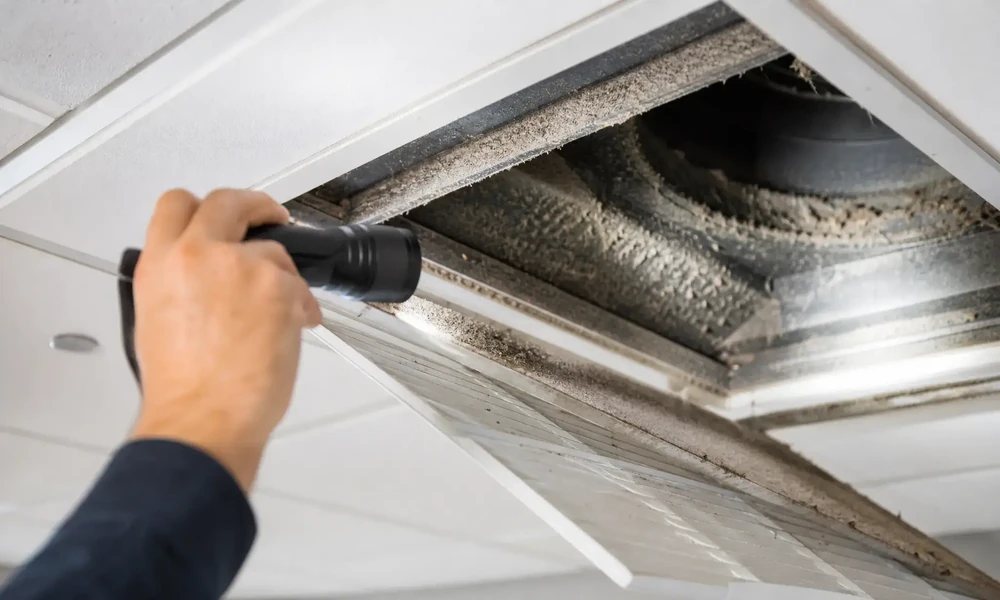

Most homeowners will scrub a toilet, regrout a shower, and repaint a bedroom without ever once thinking about what’s inside their air ducts. And that’s a problem. Because while you’re not looking, your ductwork quietly collects years of dust, pet dander, mold spores, and debris – and then recirculates all of it through every room in your house, every single day your HVAC system runs.
The warning signs are usually hiding in plain sight. You just need to know where to look. This article walks you through the clearest indicators that your ductwork is past due for a professional cleaning, explains why the timing matters more than most people realize, and gives you a practical framework to decide what to do next.
Why Indoor Air Quality Deserves More of Your Attention
Here’s a number worth sitting with: Americans spend approximately 90 percent of their time indoors, where levels of pollutants frequently can exceed those found outdoors , according to the U.S. Environmental Protection Agency. That means the air quality inside your home isn’t a minor comfort issue. It’s where you spend your life.
Your duct system is the delivery mechanism for all of that air. Sources of indoor air pollution include building materials, personal care and cleaning products, and outdoor air pollution that enters buildings and homes, including wildfire smoke and mold – and every one of those contaminants gets pulled through your ductwork before it reaches your lungs. A dirty duct system doesn’t just carry air. It carries whatever has been sitting in those passages for months or years.
For more on how indoor pollutant concentrations are measured and what drives them up, the EPA’s Indoor Air Quality Research division publishes ongoing findings on indoor exposure sources across residential settings.
The Warning Signs You Shouldn’t Ignore
Think about the last time you pulled a vent cover off the wall. Did you see a gray ring of packed dust around the edges? That’s one of the most reliable visual cues that your system hasn’t been cleaned in a long time. But it’s far from the only one.
Dust that comes back fast. You wipe down a shelf on Saturday. By Wednesday it’s dusty again. That’s not normal household dust settling – that’s your HVAC system redistributing particles every time it cycles on. When ductwork is heavily contaminated, it continuously seeds your living spaces with the same debris no matter how often you clean.
Musty or stale smells from the vents. A distinct odor when your heat or AC kicks on is often the clearest sign of mold or mildew growth inside the ductwork. This happens when condensation gets trapped in poorly sealed or insulated sections of duct, creating exactly the environment mold needs. If the smell hits you right as the system starts, the source is almost certainly in the duct system itself, not elsewhere in the house.
Allergy symptoms that don’t follow the season. Seasonal allergies come and go. If someone in your household is sneezing, dealing with congestion, or waking up with irritated eyes year-round regardless of what’s happening outside, the culprit may be circulating indoors. Studies suggest that indoor concentrations of air pollutants are increasing, driven by factors such as the types of chemicals in home products, inadequate ventilation, hotter temperatures, and higher humidity , according to the National Institute of Environmental Health Sciences. Dirty ducts make all of those factors worse.
Uneven heating or cooling across rooms. One bedroom that never gets warm enough, another that stays stuffy no matter what you set the thermostat to – inconsistent airflow is a mechanical sign that something is blocking or restricting your duct system. Sometimes it’s a damper issue. Often, it’s buildup.
Energy bills climbing without explanation. If your usage habits haven’t changed but your utility costs keep going up, your HVAC system may simply be working harder than it should. Restricted airflow forces the blower motor to run longer cycles just to move the same amount of conditioned air.
The Energy Angle Most People Miss
Most conversations about duct cleaning focus on air quality. The energy side of the equation doesn’t get nearly enough attention, and that’s a missed opportunity for your wallet.
A landmark 2025 study conducted by NADCA (the HVAC Inspection, Cleaning, and Restoration Association) in partnership with researchers at the University of Colorado found striking results: fan and blower energy consumption dropped by 41% to 60% after cleaning, with supply airflow improving between 10% and 46% compared to uncleaned systems . Those aren’t marginal improvements. For a home in a climate that runs heating and cooling hard through most of the year, those numbers translate directly to dollars on your monthly bill.
The full findings from NADCA’s energy research are available at nadca.com, and they make a strong case for treating duct cleaning as a financial decision, not just a comfort one.
“The study’s findings highlight how routine HVAC cleaning can deliver substantial benefits for energy conservation and indoor air quality. This approach not only supports sustainability goals but also ensures healthier living and working environments.”
– Tyler Batchelder, ASCS, CVI, NADCA Board Member and Co-Chair of the Energy Study Task Force, January 2025
The Dust Drift Diagnostic: A Simple Self-Check
Before you call anyone, run through this four-step check yourself. I call it the Dust Drift Diagnostic, and it takes about ten minutes.
- Pull a vent cover. Remove one floor or ceiling register and look inside with a flashlight. A thin layer of dust is normal. Visible clumps, dark buildup along the duct walls, or anything that looks like gray insulation stuck to the metal – that’s a red flag.
- Check the return air grille. The large grille that pulls air back into the system (usually in a hallway or main living area) accumulates debris faster than supply vents. If it’s caked with dust, what’s inside the system is almost certainly worse.
- Run the system and sniff. Stand near an active supply vent and take a slow breath right as the system kicks on. A faint, slightly stale smell is worth noting. A musty or earthy smell is worth acting on immediately.
- Watch the air handler filter. Change your filter on schedule and note how dirty it looks after just 30 days. A filter that’s visibly clogged after a single month means your system is pulling in a high volume of particulates from somewhere, often from within the duct system itself.
If two or more of these checks come back with red flags, that’s a strong signal to get a professional inspection. One flag alone may just mean your filter needs more frequent replacement. Two or more together tells a different story.
When You Should Move Faster Than the 3-to-5-Year Rule
The standard recommendation from industry professionals is a cleaning every three to five years under normal conditions. But normal conditions are rarer than people think.
| Situation | Recommended Cleaning Interval |
|---|---|
| Standard household, no pets or allergy sufferers | Every 3 to 5 years |
| One or more shedding pets | Every 2 to 3 years |
| Allergy or asthma sufferers in the home | Every 2 years |
| Recent home renovation or construction | Immediately after project completion |
| Visible mold inside ductwork or at registers | Immediately, with mold remediation |
| Newly purchased older home (history unknown) | Schedule before moving in |
A renovation is worth calling out specifically. Picture this: you just finished a kitchen remodel – new cabinets, fresh drywall, sanded and painted surfaces. The ductwork was cleaned two years ago and looks fine on paper. But construction dust is fine enough to penetrate deep into duct passages, and once that drywall particulate is coating your duct walls, every heating cycle pushes it right back into your living space. Timing a cleaning after major construction isn’t optional. It’s the only way to actually clear out what the project left behind.
For homeowners in the Hagerstown area specifically, the National Institute of Environmental Health Sciences notes that indoor pollutant sources including mold, smoke, vapors, and chemicals from household products all degrade air quality in ways that standard duct maintenance directly addresses. Getting a professional assessment from a provider offering air duct cleaning in Hagerstown is the most direct way to know what’s actually in your system rather than guessing from surface-level cues.
What Happens During a Professional Cleaning
A serious duct cleaning job is not a vacuum run along the nearest registers. A qualified technician will put the system under negative pressure using commercial-grade equipment, then work through every accessible section of ductwork with rotary brushes and high-powered extraction to dislodge and remove buildup from the duct walls. Supply lines, return lines, the air handler, coils, and the blower motor housing all get attention. If mold is present, antimicrobial treatment follows physical removal.
The whole process for a typical single-family home takes two to four hours. You’ll see the evidence of what came out – and most homeowners are genuinely surprised by the volume.
Your ductwork runs throughout every room of your home, touching every breath taken inside. Treating it as an afterthought makes about as much sense as never cleaning any other surface in the house. The signs are usually there. The question is whether you catch them before they cost you more than a cleaning would have.