
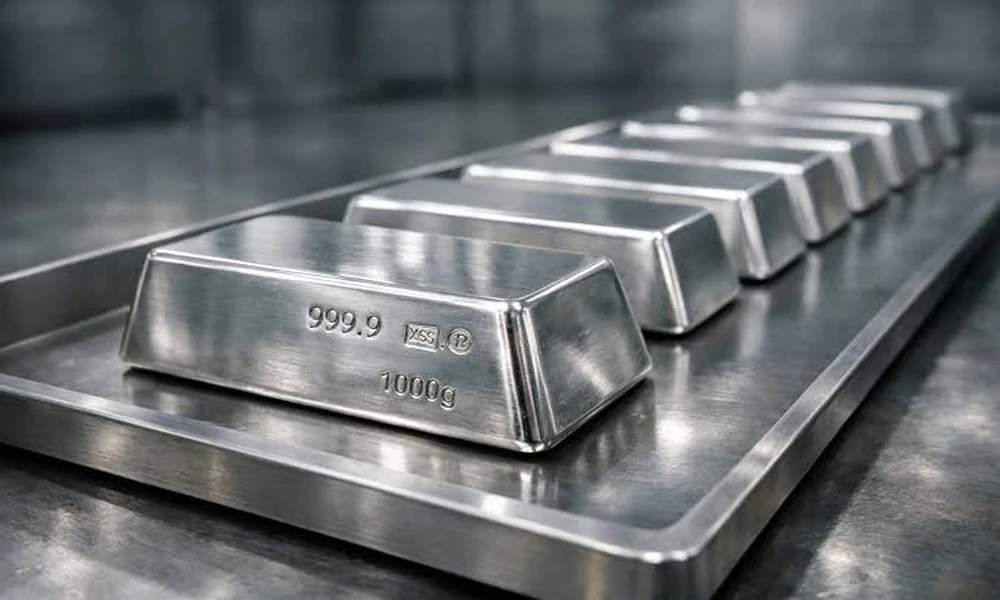

A 100 ounce silver bar weighs more than a bowling ball and costs about as much as a used car. That single fact explains why most people who own them have never actually held one.
You have probably seen silver bars in movies, on vault tours, or stacked in photos on dealer sites, and you may have wondered how they go from a furnace to a floor safe somewhere in the desert.
The short answer is that the big bar world runs on three things: refinery standards, physical logistics, and a resale market that behaves very differently from the coins most people start with. Investors who buy 100 oz silver bars usually learn that lesson the first time they try to move one, and it shapes every decision after that.
Here is the whole chain, from molten metal to the moment you sell. By the end you will know what the stamps mean, why the storage question matters more than the purchase price, and which mistakes tend to cost people real money.
What actually goes into a poured bar
A London Good Delivery bar weighs roughly 1,000 troy ounces. Most retail bars are poured or stamped in smaller sizes, and the 100 ounce format sits in a useful middle ground: heavy enough for lower premiums, small enough to fit in a safe.
The refinement start is ore. Silver comes out of the ground mixed with lead, copper, zinc, and other metals, and getting it to .999 fine takes smelting, cupellation, and electrolytic refining. The U.S. Geological Survey publishes mineral commodity summaries showing that most silver mined today is a byproduct of lead, zinc, and copper operations, which means supply depends more on base metal mines than on dedicated silver mines. That is a supply fact, not a price prediction, and I would not build a case for buying silver on it alone.
Once refined, the metal gets melted and cast into molds or run through a press. Poured bars have rounded shoulders, uneven edges, and a slightly rippled top face. Stamped bars look machined. Neither pour style is better for the metal itself, though collectors pay more for pours with distinctive character.
Reading the stamp
Every legitimate bar carries a few pieces of information:
- The refiner’s name or registered mark
- Purity, usually .999 or .9999 fine silver
- Weight in troy ounces
- A serial number
- Sometimes an assay or certificate reference
A bar with no serial number or a sloppy, painted-on stamp is worth a slow second look. I would pass on it. There are plenty of clean bars to choose from, and the discount is never worth the resale headache.
Why pick 100 ounces instead of ten 10s
Premiums fall as bars get bigger. That is the main argument for the 100 ounce size, and it is a real one. If you are buying to hold long term, a lower premium per ounce means you keep more of your money in metal.
The tradeoff is flexibility. Ten 10 ounce bars can be sold one at a time. A single 100 ounce bar has to move all at once, and it has to move to someone willing to write a five figure check.
My take: if you are building a first position, small bars and government coins make more sense.
If you already own a core holding and you are adding metal you do not plan to touch for years, the larger bar wins on economics. The size is not the point. The size has to match how you actually expect to sell.
Storage is the part nobody prices in
Here is where the big bar gets inconvenient. If you hold 5,000 ounces of silver, you have a 60 pound pile sitting somewhere. Three realistic options exist.
- Home storage. A rated safe bolted to the slab, insured through a rider on your homeowners policy. Cheap, but you carry the risk and you need to check your policy limits.
- Depository storage. Third party vaults in places like Delaware or Salt Lake City, with allocated or unallocated arrangements and annual fees that usually run a fraction of a percent of value.
- An IRA. Self directed precious metals IRAs hold approved bars, including most 100 ounce silver products that meet minimum fineness rules. That structure comes with custodial fees and distribution rules, so read the terms before you commit.
I have seen people buy a great bar at a great price, then store it in a closet and lose sleep over it. The savings evaporated the moment the anxiety showed up. Pick the storage route first, then size the purchase to fit it.
What the stamps and the trade bodies have in common
Standards exist so that a bar bought in one country can be sold in another without argument. The Commodity Futures Trading Commission oversees the regulated futures markets where silver contracts trade, and that oversight is a big part of why bars have liquid, quotable resale values at all.
Refiners who want their bars accepted by major dealers typically meet recognized good delivery standards, which is why an unknown name with a slick website and no track record can still be a bad bet. You are not just buying metal. You are buying a bar that other professionals will recognize and accept.
Assay cards and packaging
Many bars ship sealed in plastic with a paper assay card. Keep both. Sealed bars with intact assay cards often resell faster and at tighter spreads, because the buyer does not have to pay for testing. A loose bar in a ziplock bag is not ruined, but it is worth less to a dealer who then has to verify it.
Buying and selling without getting burned
You can run through this list in about ten minutes.
- Compare the price to the spot quote on the same day, and ask exactly what premium you are paying.
- Ask whether there is a buyback policy and what spread the dealer applies when you sell back.
- Check the serial number against the refiner’s records if the refiner offers lookup.
- Confirm insured shipping and who carries the loss in transit.
- Ask how long payment takes to clear and how long the dealer takes to ship.
Dealers do not always volunteer the buyback spread. Ask anyway. It is the number that decides whether your trade made sense and it is the one figure most first time buyers forget to get in writing.
Counterfeit bars are a real concern in this market, which is one reason reputable dealers test incoming metal and why third party grading services exist. The Smithsonian Institution holds numismatic collections that document how long people have been marking and trading precious metal objects, and the impulse to fake a valuable one is just as old.
What I would actually do
If you are new, start with smaller bars or coins so you can learn the market without parking a large sum in one object. Once you have a storage plan and a dealer relationship you trust, add a larger bar for the premium savings. If you are buying purely on price and have not thought about who buys it from you later, you are not investing. You are just holding something heavy.
Before you place an order, call one dealer and ask three questions: what is the premium, what is the buyback spread, and who stores it if you do not. The answers will tell you more about the deal than any chart will.